Buying your first home is exciting, but the down payment and mortgage insurance can make…
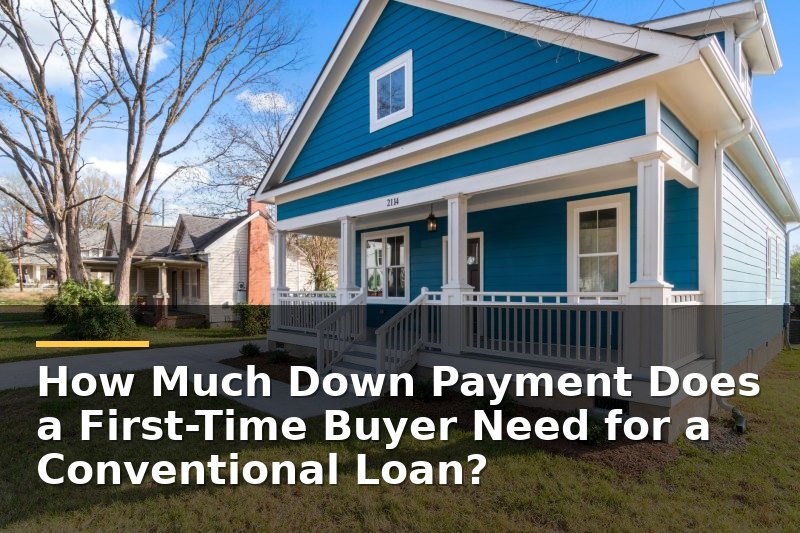
How Much Down Payment Does a First-Time Buyer Need for a Conventional Loan?
Saving for a first home can be difficult when you are not sure if you need 3%, 5%, or 20% down.
A first-time buyer may be able to purchase a primary residence with as little as 3% down using an eligible conventional loan program, although qualifications and property requirements vary.
In this guide, I will explain the common down payment options, how mortgage insurance works, and how much cash you may really need at closing.
Key Takeaways
- Minimum Down Payment: Some conventional programs allow eligible first-time buyers to put as little as 3% down.
- Eligibility: Credit, income, debts, occupancy, and property type all affect which down payment options are available.
- Mortgage Insurance: A down payment below 20% will commonly require private mortgage insurance.
- Total Cash Needed: Your down payment is only one part of the money needed for closing costs, prepaid expenses, and possible reserves.
Quick Answers
- Do first-time buyers need 20% down? No. A 20% down payment generally avoids private mortgage insurance, but it is not required for many conventional loans.
- Is 3% down available to every buyer? No. The 3% option is tied to specific programs and may have income, occupancy, loan size, or first-time buyer requirements.
- Does a higher credit score reduce the required down payment? Not always, but stronger credit may improve pricing and mortgage insurance options.
- Can the seller pay the down payment? Sellers generally cannot provide your required down payment, but they may contribute toward eligible closing costs within program limits.
I am Michael King (NMLS# 274357), a loan consultant with Mortgage Solutions NW. I am licensed in Oregon and Washington and have 28 years of mortgage experience helping buyers compare their financing options.
The Minimum Conventional Down Payment May Be 3%
A 3% down conventional loan may be available when you are buying an eligible primary residence and meet the program guidelines. This can be helpful if you have stable income and acceptable credit but do not want to use all of your available cash for the down payment.
The 3% option is not a single loan offered under the same terms by every lender. Conventional loans are commonly underwritten to Fannie Mae or Freddie Mac guidelines, and each agency has specific programs. A lender may also have additional requirements called overlays.
For example, an agency program may allow a certain down payment, while an individual lender may require a stronger credit profile or place limits on a particular property type. This is why I review the full scenario rather than looking only at the down payment.
Buyers who do not qualify for a 3% program may still have a conventional option with 5% down or more. You can also review broader low down payment purchase options before deciding which structure makes sense.
What Counts as a First-Time Home Buyer?
For many conventional loan programs, a first-time buyer is someone who has not had an ownership interest in a principal residence during the previous three years. You do not always need to be purchasing your first property ever.
The exact definition can depend on the loan program and your ownership history. Owning an investment property, inheriting an interest in real estate, or recently selling a home may require a closer review.
Some conventional programs do not require every borrower on the loan to be a first-time buyer. Others may use income limits or property location requirements. Current guidelines should be checked before you make an offer.
My first-time home buyer loan overview covers additional planning points, including pre-approval and comparing loan programs.
Conventional Down Payment Options Compared
| Down Payment | How It Is Commonly Used | Main Tradeoff |
|---|---|---|
| 3% | Eligible primary residence purchases under specific conventional programs. | Higher loan amount and private mortgage insurance will commonly apply. |
| 5% or more | A common option when the 3% program does not fit or the buyer wants a smaller loan. | More cash is required at closing. |
| 10% or more | May reduce the loan balance and improve mortgage insurance pricing. | Using more cash may leave less available after closing. |
| 20% | Generally used to avoid private mortgage insurance. | Requires a larger amount of cash up front. |
These are general examples rather than an approval chart. Loan size, property type, occupancy, credit, income, and current agency guidelines can change the options available to you.
How Private Mortgage Insurance Affects the Payment
Private mortgage insurance, commonly called PMI, protects the lender when a conventional borrower makes a down payment below 20%. It does not provide insurance coverage for the borrower if payments become difficult.
PMI is not one fixed cost. Pricing commonly depends on your credit score, down payment, loan term, occupancy, and other risk factors. It is usually included in the monthly payment, although other structures may be available.
A smaller down payment can help you buy sooner, but it usually means a larger loan balance and a PMI expense. A larger down payment may reduce the monthly payment, but it also uses more of your savings.
Lets run some numbers. I like to compare the payment and estimated cash needed at several down payment levels instead of assuming that 20% down is automatically the right choice.
Your Down Payment Is Not Your Total Cash to Close
Cash to close includes the down payment plus closing costs and prepaid expenses, minus eligible credits and deposits already paid. This is one of the areas that can surprise a buyer who has only budgeted for the down payment.
Your total may include:
- Loan and third-party closing costs
- Prepaid homeowners insurance
- Property tax and insurance escrow deposits
- Appraisal and inspection expenses
- Any required financial reserves
- A credit for earnest money already deposited
- Eligible lender or seller credits
Closing costs vary by loan, property, lender, and location. A home in Multnomah County may have different taxes and prepaid expenses than a property in Clackamas County, Washington County, Clark County, or King County.
No surprises later, here is what I can offer you: I can prepare estimates at different purchase prices and down payments so you can see the full picture before writing an offer.
Where Can the Down Payment Come From?
Conventional programs may allow the down payment to come from more than one eligible source. Each source must be documented so the underwriter can confirm where the funds came from and whether repayment is required.
Your Own Funds
Checking, savings, money market, and eligible investment accounts are common sources. Large or unusual deposits may need an explanation and supporting documents.
Gift Funds
Gift funds may be allowed from an eligible donor. The lender will commonly require a gift letter and documentation showing the transfer of funds. A true gift cannot have an undisclosed repayment agreement.
Down Payment Assistance
Some buyers may qualify for a grant, forgivable loan, or second mortgage through an assistance program. These programs can have income limits, purchase price limits, education requirements, or repayment terms.
The assistance program must also be compatible with the first mortgage. A program being available does not mean it works with every conventional loan.
Sale of Assets
Funds from selling an eligible asset may be used when the sale and deposit are documented. The lender may request proof of ownership, the sales agreement, and evidence that the money reached your account.
How Much Should You Put Down?
The minimum allowed down payment is not always the amount you should choose. I look at how the down payment affects the loan balance, monthly payment, PMI, closing funds, and savings left after the purchase.
Here are the main questions I recommend reviewing:
- How much will you have left after closing?
- Do you need money for repairs, moving, or furnishings?
- How does PMI change at different down payment levels?
- Would paying off another debt improve the monthly budget more?
- Are gift funds or assistance programs available?
- Does the property type change the required down payment?
A fixed-rate conventional mortgage can provide a principal and interest payment that does not change during the loan term, but taxes, insurance, and mortgage insurance may change. Rates, fees, and program requirements also change, so current information should be verified with a lender.
Credit, Income, and Property Still Matter
A down payment by itself does not determine eligibility. Conventional underwriting also reviews your credit history, monthly debts, income, employment, assets, and the property.
Borrower eligibility and property eligibility are separate. You may meet the credit and income guidelines while the property needs additional review due to its condition, ownership structure, appraisal, or project requirements.
Condominiums, manufactured homes, multi-unit properties, and investment properties can have different guidelines. A loan may also fall outside conforming loan limits, which vary by county, and require a jumbo program with different down payment standards.
Plan the Down Payment Before You Make an Offer
A pre-approval gives us a chance to review the documentation, compare down payment choices, and estimate the full cash needed. It also helps identify questions about gift funds, assistance, or property type before you are under contract.
If you are buying in Oregon or Washington, you are welcome to call, text, or email me. I can review your scenario, compare conventional and other eligible options, and explain the next steps for pre-approval planning.
Frequently Asked Questions
Can I buy a two- to four-unit property with 3% down?
Down payment requirements for multi-unit properties depend on the current conventional program, occupancy, and lender guidelines. If you will occupy one unit as your primary residence, options may differ from those for a fully non-owner-occupied investment property.
Does buying a condominium change the down payment requirement?
It can. The borrower must qualify, and the condominium project may also need to meet agency and lender requirements involving insurance, ownership, finances, and property condition.
Can I use money from a retirement account for the down payment?
Eligible retirement funds may be used, but the lender will need documentation showing the withdrawal or loan terms and the deposit into an acceptable account. Taxes, penalties, and any new monthly repayment obligation should be reviewed before taking funds out.
What happens if the appraisal is lower than the purchase price?
The lender generally calculates the loan using the lower of the purchase price or appraised value. You may need to renegotiate, increase your cash contribution, change the loan structure, or use another option allowed by the purchase agreement.
How long after owning a home can I qualify as a first-time buyer again?
Many conventional programs use a three-year period without ownership in a principal residence. Your full ownership history and the specific program rules should be reviewed because exceptions and definitions can vary.
This is educational and not financial advice. Loan programs and guidelines can change. Talk with a licensed mortgage professional about your specific scenario.

About the Author
Michael King
Loan consultant at Mortgage Solutions NW · NMLS #274357
Michael has helped over 3,000 families finance their dream home or refinance across Oregon and Washington.
Specializes in: VA, Conventional, FHA,
Licensed in: OR, WA
Related Posts